
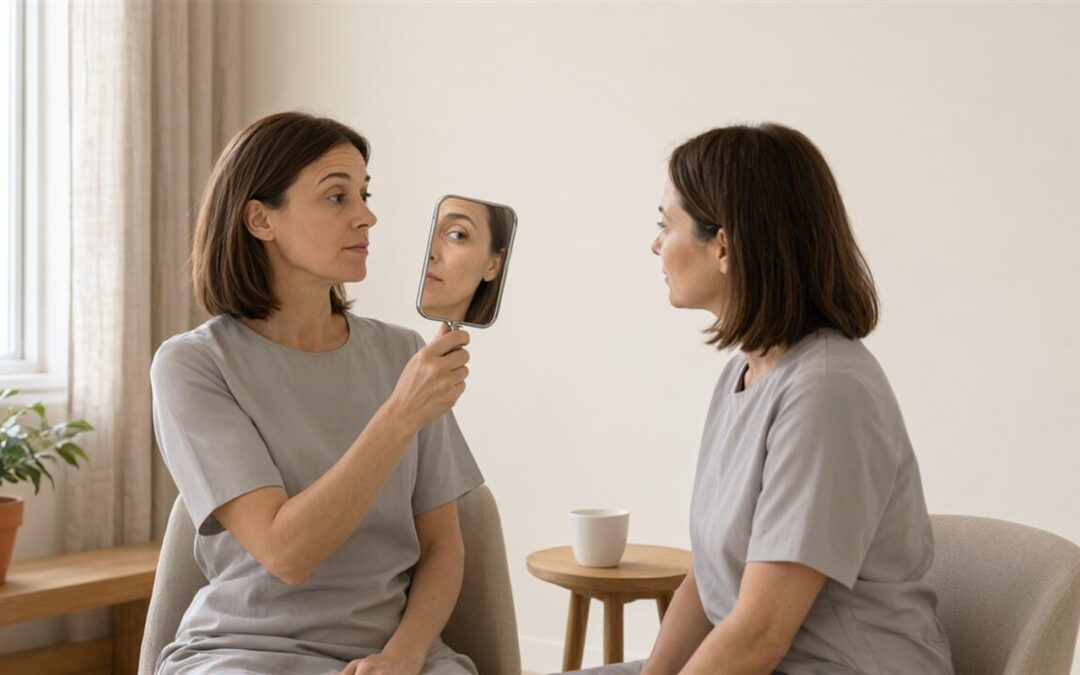
You notice the change before you can name it. A line that used to fade now stays. Cheeks that once caught the light look flatter in photographs. Foundation settles into a surface that feels rougher than it looks. Naming the change is harder than spotting it, partly because aesthetic medicine uses one word for three different problems.
There is a simpler place to start. Most facial concerns fall into four groups, and each group responds to a different kind of treatment. Sorting your concern into the right group, before choosing a product name, is what makes a first appointment productive. What follows is a walk through the four categories, the signals that separate them, and the questions worth asking before you book.
Four Concerns, Four Different Jobs
The face changes in four fairly distinct ways, and the distinctions matter because the mechanisms are not the same. Muscle movement creates one kind of line. Lost fat and structural support create another. The skin’s surface creates a third, and the skin’s overall condition a fourth. A treatment built for one of these does very little for the others, which is why choosing a service is really a question of choosing a category.
If you have typed “how to know if I need Botox filler or laser” into a search box, that is the question underneath the words. The answer starts with what you can observe, not with what a practice happens to offer.
- Movement: lines that appear when you smile, frown, or squint, and soften when the face is still.
- Volume: flattening, hollowing, and shadows where the face once carried fullness.
- Texture: pores, scarring, and an uneven surface you can feel as well as see.
- Skin quality: dullness, dryness, and a loss of firmness that spreads across the whole face.
Most people arrive with a blend of two. One category still tends to lead, and finding it narrows the conversation quickly.
Movement: Lines That Show Up When You Express
Movement lines are the easiest to identify because they behave differently at rest. Raise your brows in a mirror, then let your face settle. A line that deepens with the movement and fades when you stop is reporting muscle activity. The two vertical lines between the brows, the horizontal lines across the forehead, and the fine lines at the outer corners of the eyes are the familiar examples. As years pass, some stay visible at rest, which is why they can seem to appear overnight.
Neurotoxins, a category that includes Botox and Dysport, work by temporarily relaxing the specific muscles that create these lines. That precision is the point. The aim is to soften the movement that carved the line without flattening the expression that belongs to you. If the concern vanishes when your face is still, movement is probably your category. A neurotoxin treatment for expression lines starts with mapping which muscles are doing the work, so the plan stays conservative.
Volume: When the Face Looks Flatter, Not Just Lined
Volume loss is quieter than a line and harder to describe. The outline of the face stays the same while the architecture underneath shifts. The apples of the cheeks sit a little lower, the area under the eyes looks hollow rather than puffy, and photographs show shadows a mirror does not. People often describe it as looking tired after a full night of sleep. Nothing about the surface of the skin explains it, and moisturizer alone will not restore it.
Filler replaces what has been lost. Modern hyaluronic acid fillers add support to the cheeks, the lips, and the hollows, and the planning is where the artistry sits. A small amount placed in the right plane restores proportion; too much in the wrong plane creates the padded look many people fear. That is the honest answer to “how to tell if filler is right for me,” because it depends on whether the concern is missing support rather than surface or movement. A closer look at why cheeks look flatter than they used to can help you decide which of those you are seeing.
Texture: Scars, Pores, and Uneven Surface
Texture lives at the surface. It shows up as enlarged pores across the nose and inner cheeks, shallow or deep indentations left by acne, fine crepiness, or a graininess that makeup seems to exaggerate. You can usually feel it with a fingertip, which is a useful test: texture is a matter of the skin’s outer layers, not of shape or movement.
Resurfacing addresses it by creating a controlled injury that the skin repairs with new collagen. Laser resurfacing and OPUS fractional plasma both work on that principle, at different depths and with different recovery. The trade-off is straightforward. More aggressive resurfacing tends to produce more change and more downtime, and the right setting depends on your skin, your history of sun exposure, and how much recovery time you can protect. Laser resurfacing for texture and scarring is planned around exactly that balance.
Skin Quality: Tone, Laxity, and the Tired Look
Some concerns do not belong to a single line, hollow, or patch. The whole face looks dull, the skin feels thinner or drier, and makeup no longer sits the way it used to. That is skin quality: tone, hydration, firmness, and the way light reflects off the surface. It is also the category shaped by what accumulates quietly over time, including sun exposure, sleep, and hydration.
Skin quality responds to treatments that support the skin’s own repair rather than adding volume or relaxing muscle. Microneedling is the clearest example. Fine needles create controlled micro-injuries that prompt a collagen response, and firmness and radiance build over a series of sessions rather than in one appointment. Microneedling for skin quality is a gradual approach, and that timeline is worth understanding before you commit to it.
When Two Concerns Overlap
Categories overlap more often than they separate. Lost volume makes skin read as lax, so a face that needs support can look like a face that needs tightening. Sun damage shows up as both texture and tone. Movement lines and thinning skin tend to arrive in the same decade, which makes it easy to blame the wrong one and spend money in the wrong place.
The practical consequence is sequencing. Some treatments pair well on the same day; others are staged across visits because the skin needs to heal in between, and the interval matters as much as the treatment itself. Doing everything at once is not a shortcut. It is a way to lose track of what worked. When two categories are present, the question shifts from “what aesthetic treatment should I start with” to what order the plan should follow. Combining treatments in the right order matters more than combining many of them.
What Aesthetic Treatment Should You Start With?
Start with the category, then look at the calendar. The question “how to tell if filler is right for me” has a narrower answer than it first appears, because filler addresses support, and support is one specific kind of loss. If movement leads, a neurotoxin is usually the first conversation and the least disruptive place to begin. If volume leads, filler planning comes first. If texture or skin quality leads, resurfacing or microneedling is the entry point, and both are built over time rather than in a single visit.
It also helps to know what each option does not do. A neurotoxin will not restore lost volume, filler will not smooth a rough surface, and resurfacing will not lift a flat cheek. When a plan involves two categories, that is usually the reason.
The service list at Ageless Perfection Medical Aesthetics follows the same logic: neurotoxins such as Botox and Dysport, dermal fillers, microneedling, chemical peels, laser resurfacing, OPUS fractional plasma skin rejuvenation, IV nutrition, and GLP-1 medical weight loss for concerns that sit outside the face. It is a menu of tools, not a recommended order. Anyone asking “what aesthetic treatment should I start with” is really asking which tool matches the problem, and that is a clinical question rather than a shopping one.
Reviewing dermal filler options before a volume consultation helps you ask about the areas that actually need support instead of the trend of the month.
What to Ask Before You Choose
Bring three things to the conversation: what you notice, when you started noticing it, and what you do not want to change. Those answers tell a provider more than a list of treatment names. Ask which mechanism is driving the concern. That one question is the practical version of “how to know if I need Botox filler or laser,” and it leaves room for a different plan if the first read turns out to be wrong. Ask about staging, about recovery, and about what happens if you decide to stop.
Care at this practice is physician-directed. Dr. Jenkins Clarkson is a board-certified physician who practiced obstetrics and gynecology for 30 years before moving into aesthetics three years ago, and every plan is built around individual goals rather than a standard package. A consultation reviews health history, medications, previous aesthetic treatments, photographs, and goals before anything is scheduled, which is the point at which those questions get real answers.
Preparing for a first aesthetic consultation is easier when the questions are written down in advance rather than remembered in the room.
Key Takeaways
- Look at your face in motion and at rest before you look at a treatment menu. The difference between the two is the fastest signal you have.
- Take a photograph in daylight and compare it with one from a few years ago. Volume change is easier to see in stills than in a mirror.
- Ask for the plan in stages, with a review point after the first one, so the result can be judged before anything more is added.
- Expect a sequence rather than a single appointment when more than one category is involved.
Where to Start
Sorting a concern takes a few minutes and spares a lot of guesswork. Decide whether the change you see is about movement, volume, texture, or overall skin quality, notice where a second category creeps in, then bring those observations to a consultation where a physician can examine your face rather than a photograph of it.
Ageless Perfection Medical Aesthetics is located at 121 N Bent Street, Powell, Wyoming 82435, and sees patients from Powell and the surrounding communities. Booking an appointment is the first step toward a plan that reflects what you actually see in the mirror. Book an appointment.